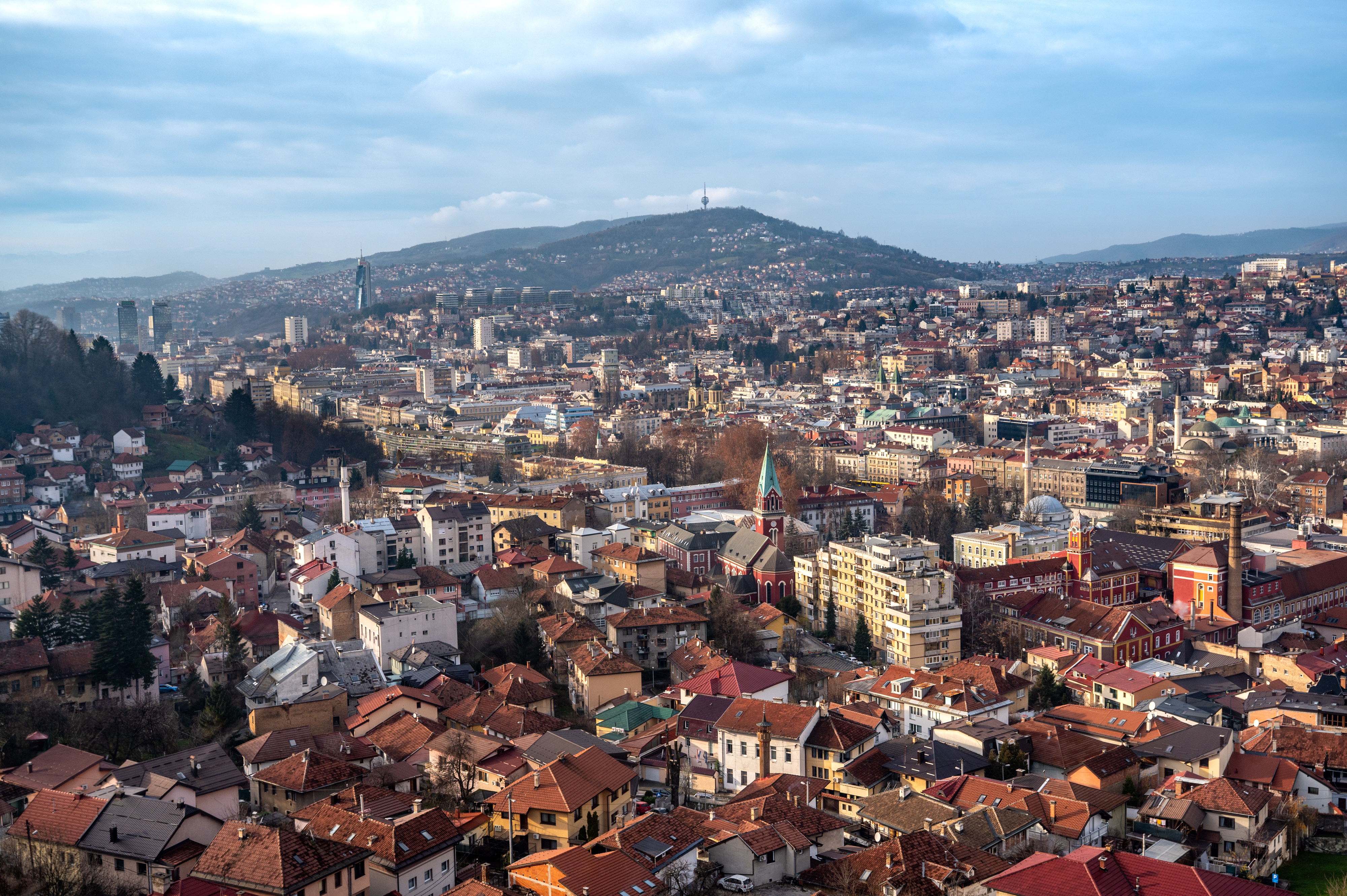

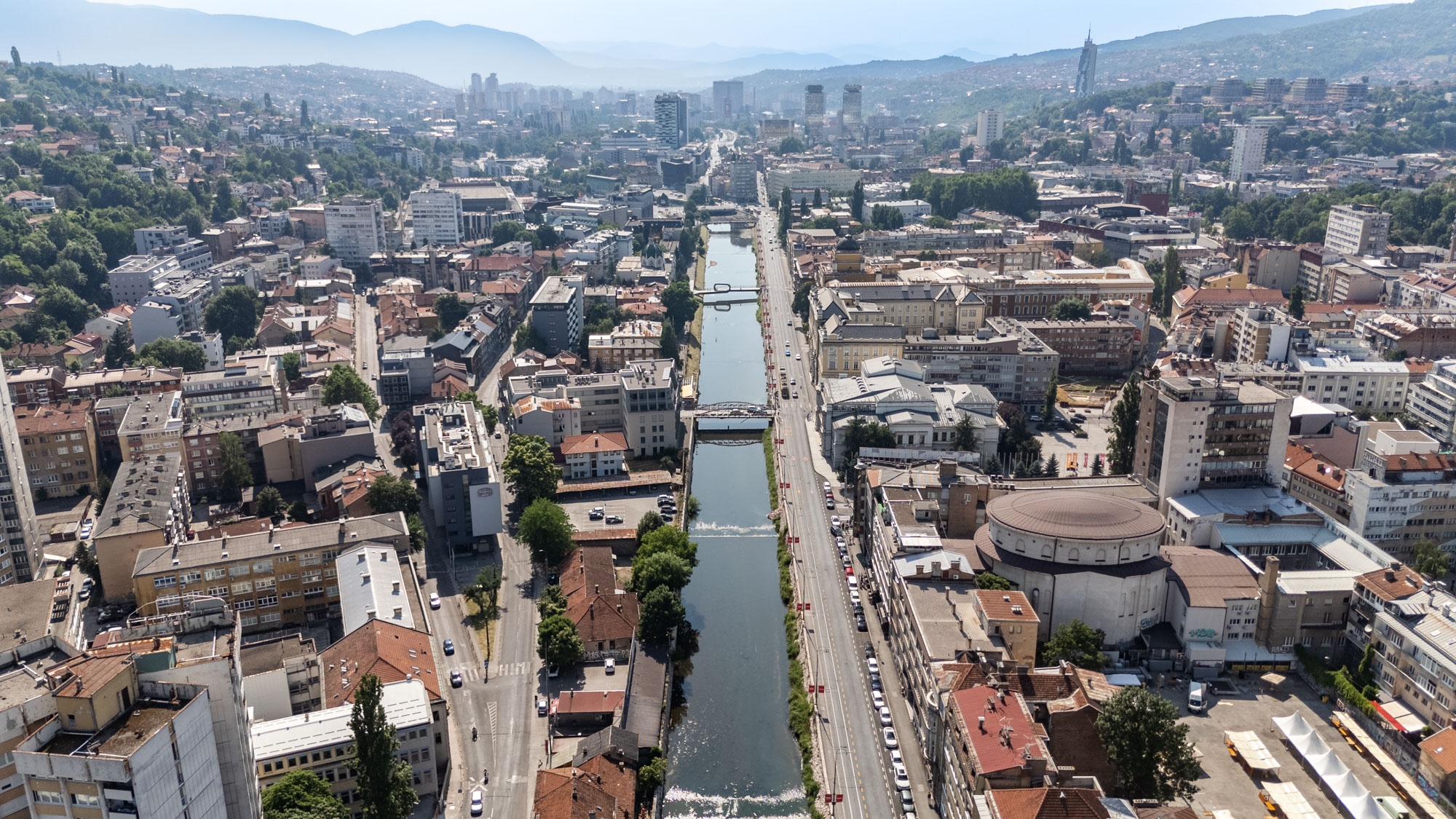

Sarajevo is the capital and largest city of Bosnia and Herzegovina, and its administrative, economic, university and cultural centre. Most of the city lies on the slopes of Mount Trebević, and the Miljacka River runs through it from end to end.
/
Static texts
Sarajevo In Brief
Updated: 13 November 2026
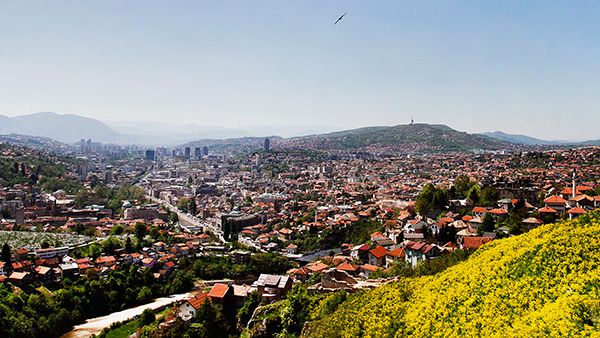
Destination Sarajevo includes the city itself, the wider area of Sarajevo Canton (in the Federation of BiH entity) and the municipalities of the City of East Sarajevo (in the Republika Srpska entity).
From the first settlements to the founding of the city
Many archaeological finds show that the Sarajevo area was inhabited as early as the Neolithic. There is also evidence of a significant Illyrian presence, and the medieval town of Hodidjed stood within today’s destination. Still, the name Sarajevo (from the Turkish words saray – palace and ova – field) reveals that the city was founded by the Ottomans. Its founder is considered to be the Ottoman governor Isa Bey Ishaković, whose endowment charter (vakufnama) of 1462 is regarded as the city’s founding document.
Anyone strolling through Sarajevo will notice four architectural layers, each reflecting the historical period in which it was created.
The Ottoman period
The foundations of Sarajevo were laid during the first 150 years of Ottoman rule. Many architectural gems date from this time, such as Gazi Husrev Bey’s Mosque, the Emperor’s Mosque, the Old Orthodox Church and Baščaršija – once a great bazaar and the commercial heart of the city. By the early 17th century, Sarajevo was a lively community of craftsmen, an important trading centre and one of the most significant cities in the European part of the Ottoman Empire.
The Austro-Hungarian period
A second architectural boom followed the Austro-Hungarian occupation in 1878 and lasted until the outbreak of the First World War. Sarajevo was modernised: the first tram ran through the city in 1885, telephone lines and electric lighting were introduced, and many cultural and educational institutions were founded, among them the National Museum. The city also gained Vijećnica (the City Hall), the Ashkenazi Synagogue, the Cathedral of Jesus’ Sacred Heart and the building that now houses the National Theatre.
The city’s development came to a halt on 28 June 1914, when Gavrilo Princip assassinated Franz Ferdinand, heir to the Austro-Hungarian throne, and his wife Sophie, setting off the chain of events that led to the First World War.
The Yugoslav era and the Olympic Games
After the First World War, Sarajevo became part of the newly formed Kingdom of Serbs, Croats and Slovenes, later renamed the Kingdom of Yugoslavia, and after the Second World War part of socialist Yugoslavia. Heavily damaged in the Second World War, Sarajevo was not only rebuilt in the post-war years but also expanded considerably.
By the time it hosted the 14th Winter Olympic Games in 1984, Sarajevo had become a modern city of almost half a million people.
The war and modern Sarajevo
Sadly, the Olympic flame burned only briefly. Eight years after the Olympics, in 1992, war broke out in Bosnia and Herzegovina and lasted until the end of 1995, and the siege of Sarajevo lasted 1,425 days.
The fourth architectural layer is modern, post-war Sarajevo. In recent years, every part of the destination has been developing rapidly, making Sarajevo a better place for its residents to live and for its growing number of visitors to stay.
Basic information
Climate: moderate continental. Summers are warm, with daytime temperatures around 27 °C in July, while winters are cold, with temperatures around freezing and frequent snow.
Language: the official languages are Bosnian, Serbian and Croatian. English and German are the most widely spoken foreign languages.
Time zone: Central European Time – CET (GMT+1), CEST (GMT+2) in summer.
Population: Destination Sarajevo has 475,109 inhabitants – 413,593 in Sarajevo Canton and 61,516 in the City of East Sarajevo (2013 census).
Ethnic groups and religions: Bosniaks, Serbs, Croats, Jews, Roma and members of other communities live in Sarajevo. The most widely practised religions are Islam, Orthodox Christianity, Catholicism and Judaism.
Electricity: 230 V, 50 Hz; type C and F sockets (European standard).
Water: tap water in Sarajevo is safe to drink.
Measurement system: metric.
Currency: the convertible mark – KM (international code BAM), pegged to the euro at a fixed rate of 1 EUR = 1.95583 KM. You can exchange money at banks, post offices and exchange offices – see Money and Exchange Offices.
Banks and post offices: banks usually work on weekdays from 8:00 a.m. to 6:00 p.m., with shorter hours on Saturdays. Check the opening hours of individual post offices on the BH Pošta website.
Payment cards: accepted in most shops, restaurants and hotels, and increasingly in cafés. Smaller shops, craft and souvenir shops in the old town and markets often accept cash only. Tickets for many events can be bought online.
Business hours: most public institutions work on weekdays from 8:00 a.m. to 4:00 p.m. Shops are usually open until 8:00 p.m. and shopping centres until 10:00 p.m.
Telephone and internet: there are three mobile operators in BiH – BH Telecom, m:tel and HT Eronet. Prepaid SIM cards and top-ups for calls and mobile data are sold at kiosks, shops and the operators’ stores. Free Wi-Fi is available in most hotels, restaurants, cafés and shopping centres. BiH is not an EU member, so EU roaming rules do not apply here – check roaming terms and prices with your own operator.
Emergency numbers: police 122, fire brigade 123, ambulance 124 – see Emergency Services.
/
YOU MIGHT BE INTERESTED
/News
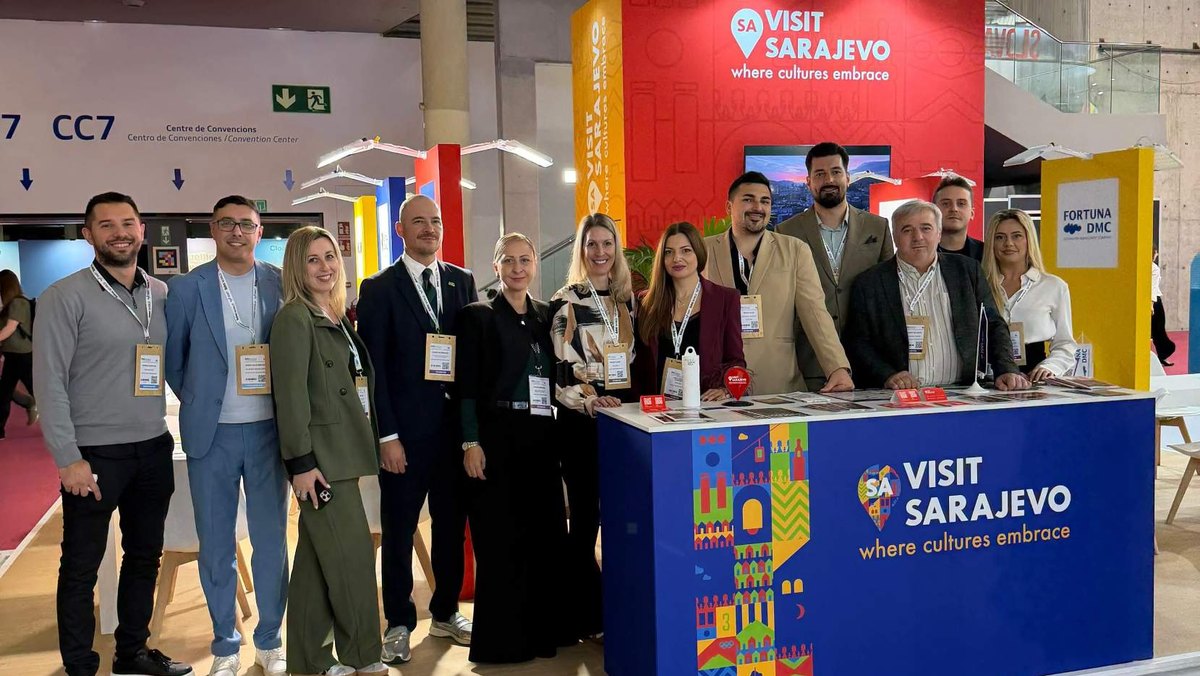
Sarajevo at IBTM World in Barcelona: a city for congresses, meetings and incentive trips
The Tourism Association of Sarajevo Canton – Visit Sarajevo presented Sarajevo at IBTM World 2026 in Barcelona , from 17 to 19 November . IBTM World brings together the MICE industry: meetings, incentives, conferences and exhibitions. A world stage for business tourism This year the fair brought together 2,500 destinations, hotels and companies from more than 150 countries, around 12,000 MICE professionals…
/News
Sarajevo 3D: Interactive city map
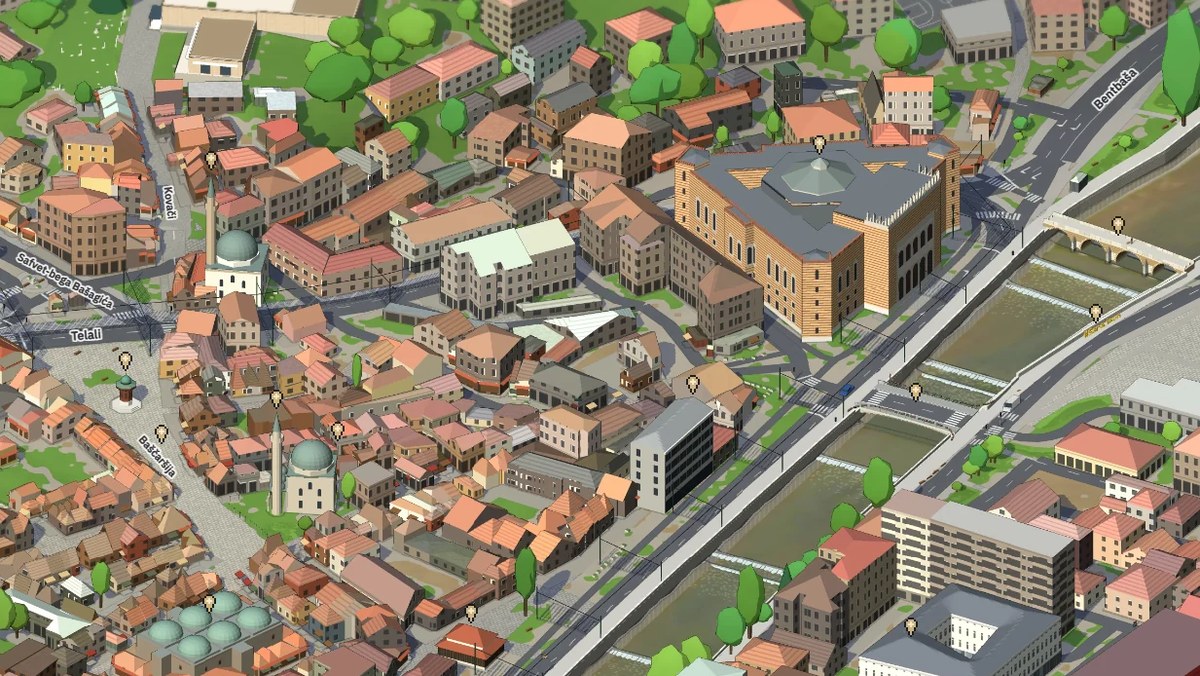
An interactive 3D map of Sarajevo is available at sarajevo.mapa.ba . It opens in a browser or on a phone, it is free, with no registration or ads, and it is available in English. The map was made by Sarajevo engineer Emir Beganović as a personal, non-commercial project, ahead of 25 November, Statehood Day of Bosnia and Herzegovina. A city that comes…
/News
Season ski passes from Slovenia, Serbia and Montenegro now valid on Sarajevo’s Olympic mountains
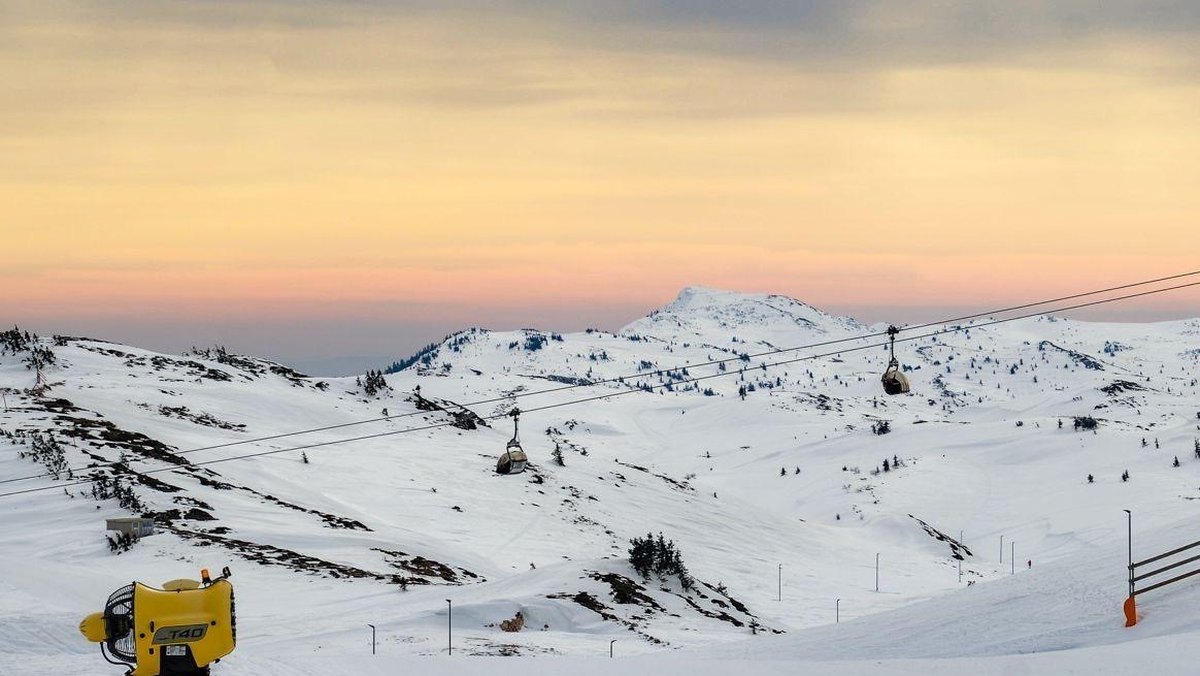
Ski resorts from Bosnia and Herzegovina, Slovenia, Serbia and Montenegro signed the SKI REGION agreement on Jahorina on 19 November 2026 . The resorts mutually recognise season ski passes, so skiers from the region can use their pass for three days on the mountains around Sarajevo. Your pass, our slopes A season pass from 16 Slovenian resorts ,…