











Kozija Ćuprija
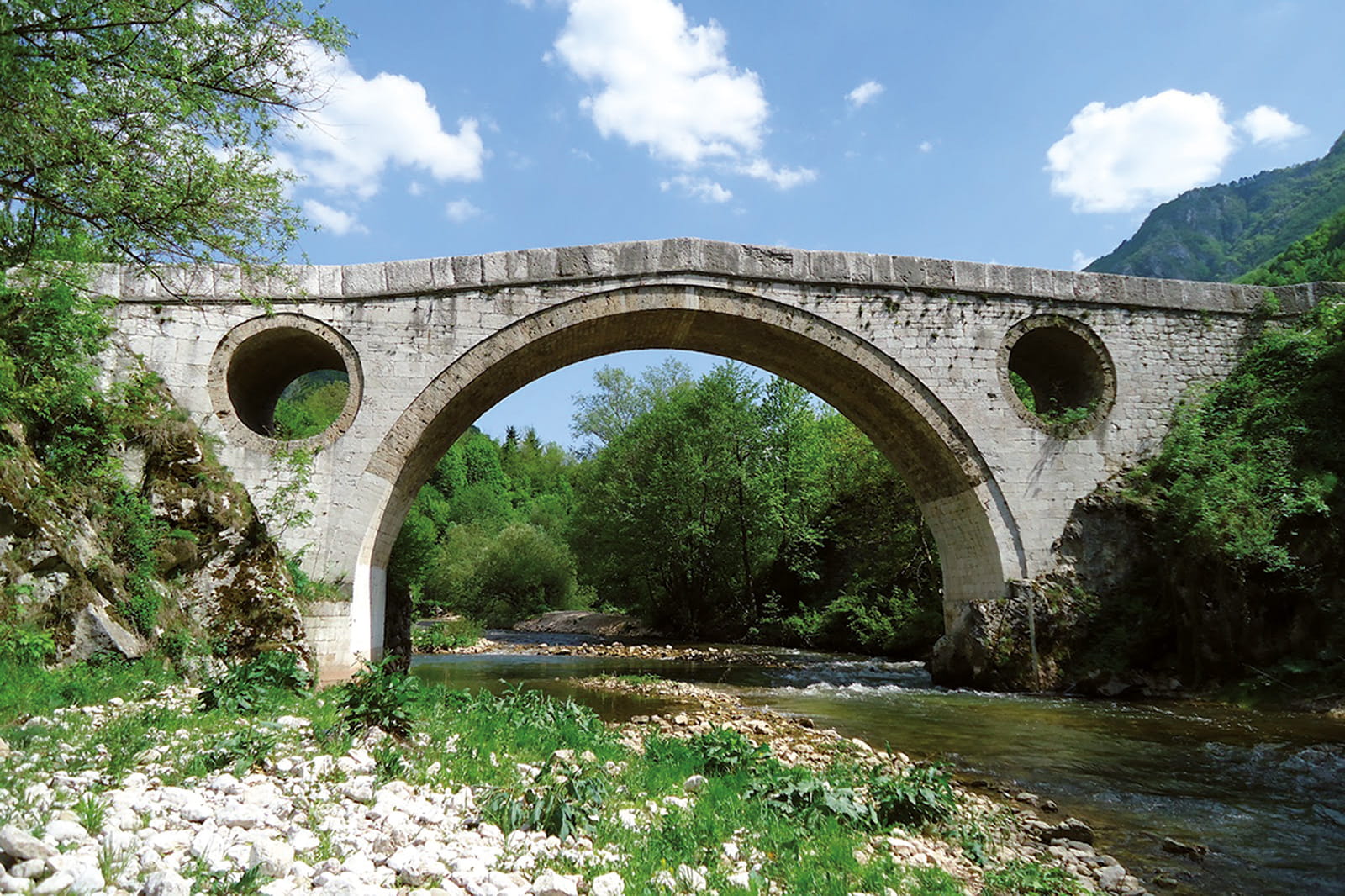
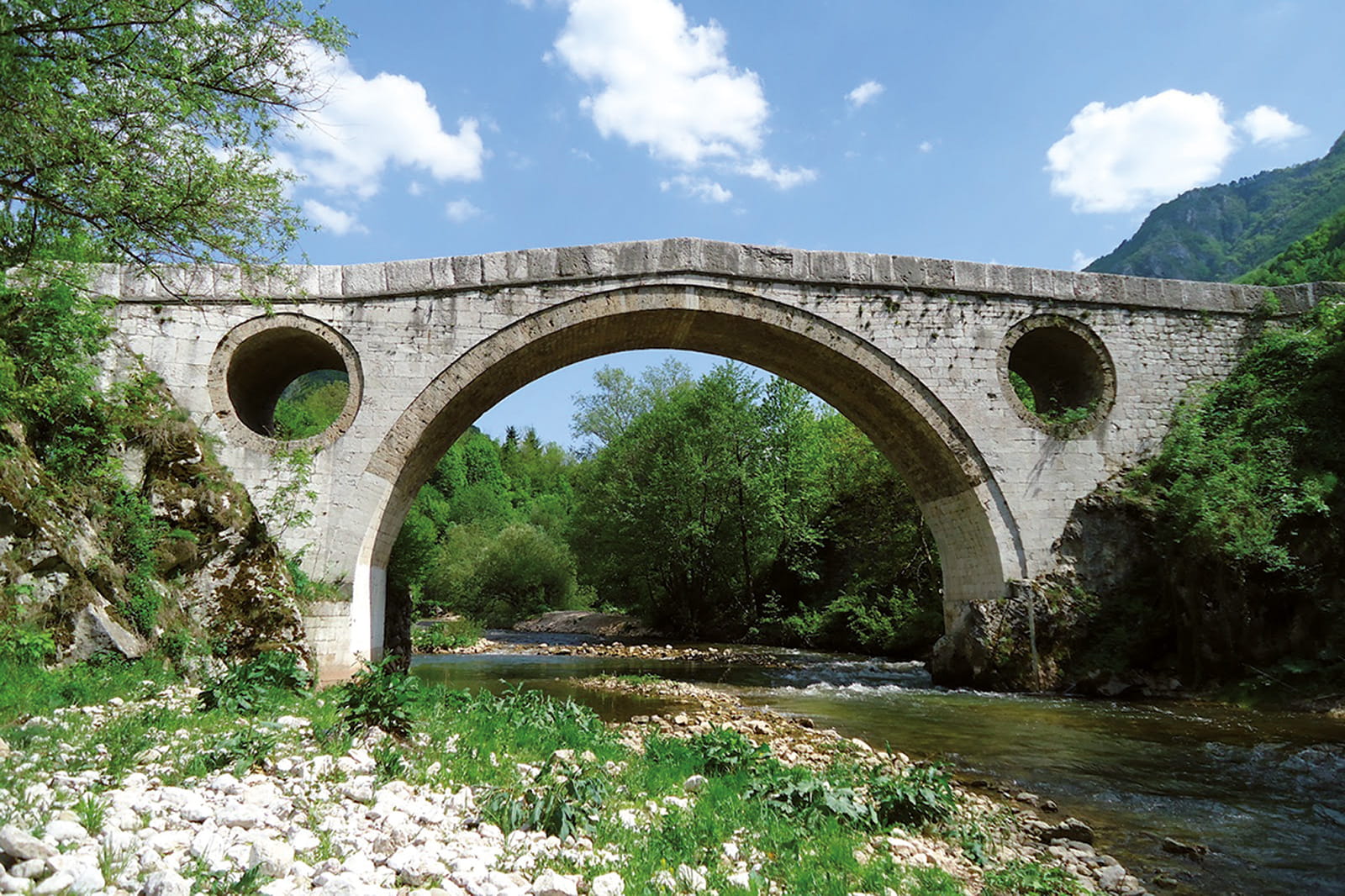
It was built in the 16th century on Carska Džada, the road that led from Sarajevo all the way to the seat of the empire – Istanbul.
The spot along the Miljacka where the bridge was erected is not very wide and it’s set firmly into the rock, making it easy to see why this particular site was chosen as the best location in the entire area.
The bridge, which is made primarily of white hreša (marble), is a harmonious structure with one main arch and two round openings which help support the weight.
While it isn’t known how the bridge got its name, it seems that the nearby settlement, Jarčedoli, presumably takes its name from the residents who used to herd goats here.
The oldest written record of this bridge was made by Mula Mustafa Bašeškija, who noted in 1771 that a stone wall was built from Kozija Čuprija all the way to Alifakovac.
Back in the old days, the bridge was a site for those who would welcome the Ottoman viziers or see off departing pilgrims.
LOCATION / AREA
Old Town
DISTANCE FROM AIRPORT
10.1km
DISTANCE FROM SARAJEVO BUS STATION
4.9km
Distance from the center
3.6km
NEAREST PUBLIC TRANSPORT STATION
Tram station Vijecnica - 2.0km
Google reviews


A nice view during the walking

Historic bridge in perfect condition. Upon arrival, there's a plaque with information. It's a pleasant and quite peaceful walk. To get there, simply follow the river along the left bank (the city side) and go straight ahead. On the other side of the river, the path appears overgrown and not very well marked, so I wouldn't recommend it if you're unfamiliar with the route.

The only well-preserved stone bridge, in orgonal condition, from the Ottoman period, was used for caravans to Dubrovnik and Istanbul