


Hadžijska (Vekil Harčova) Mosque
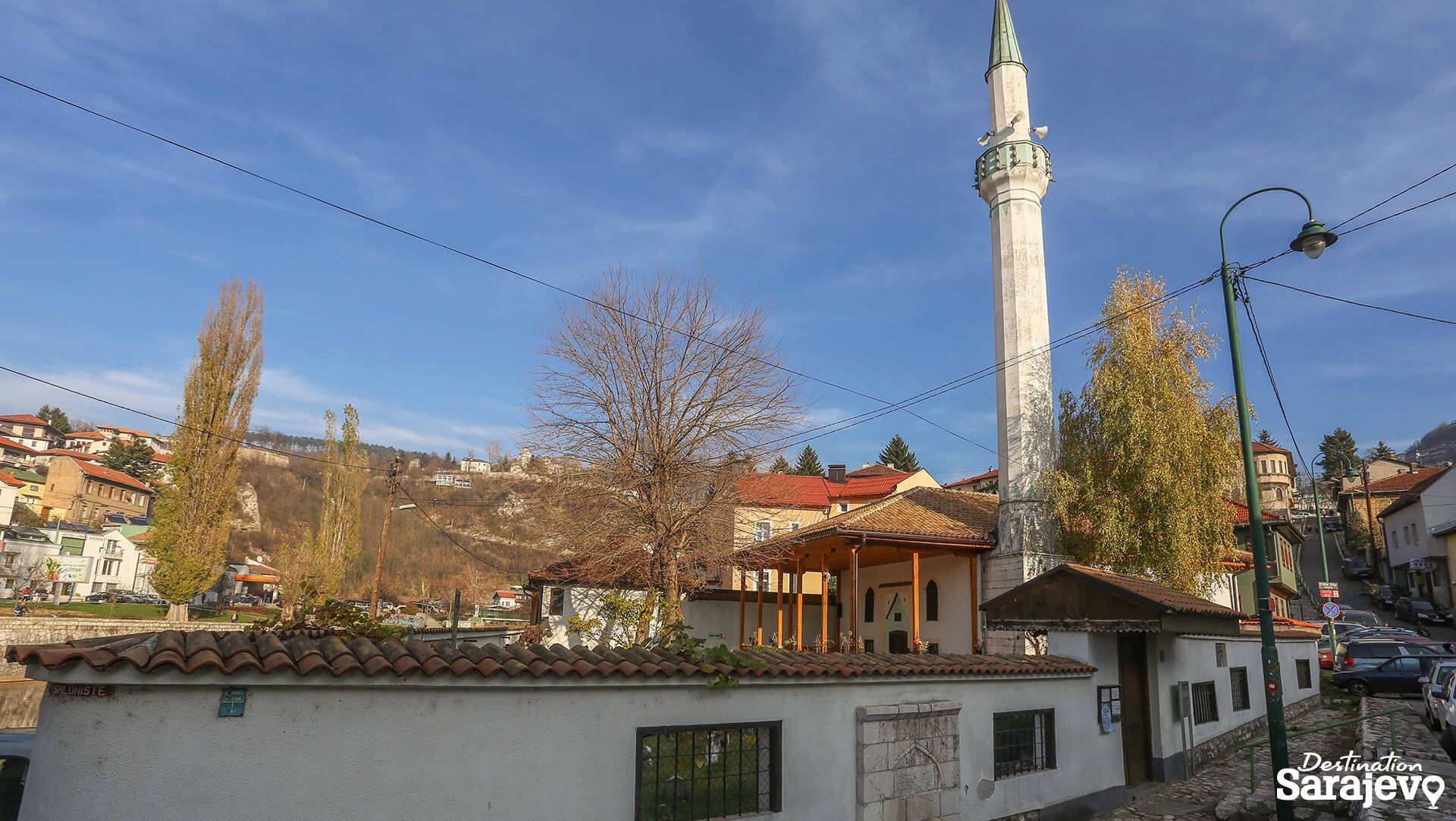
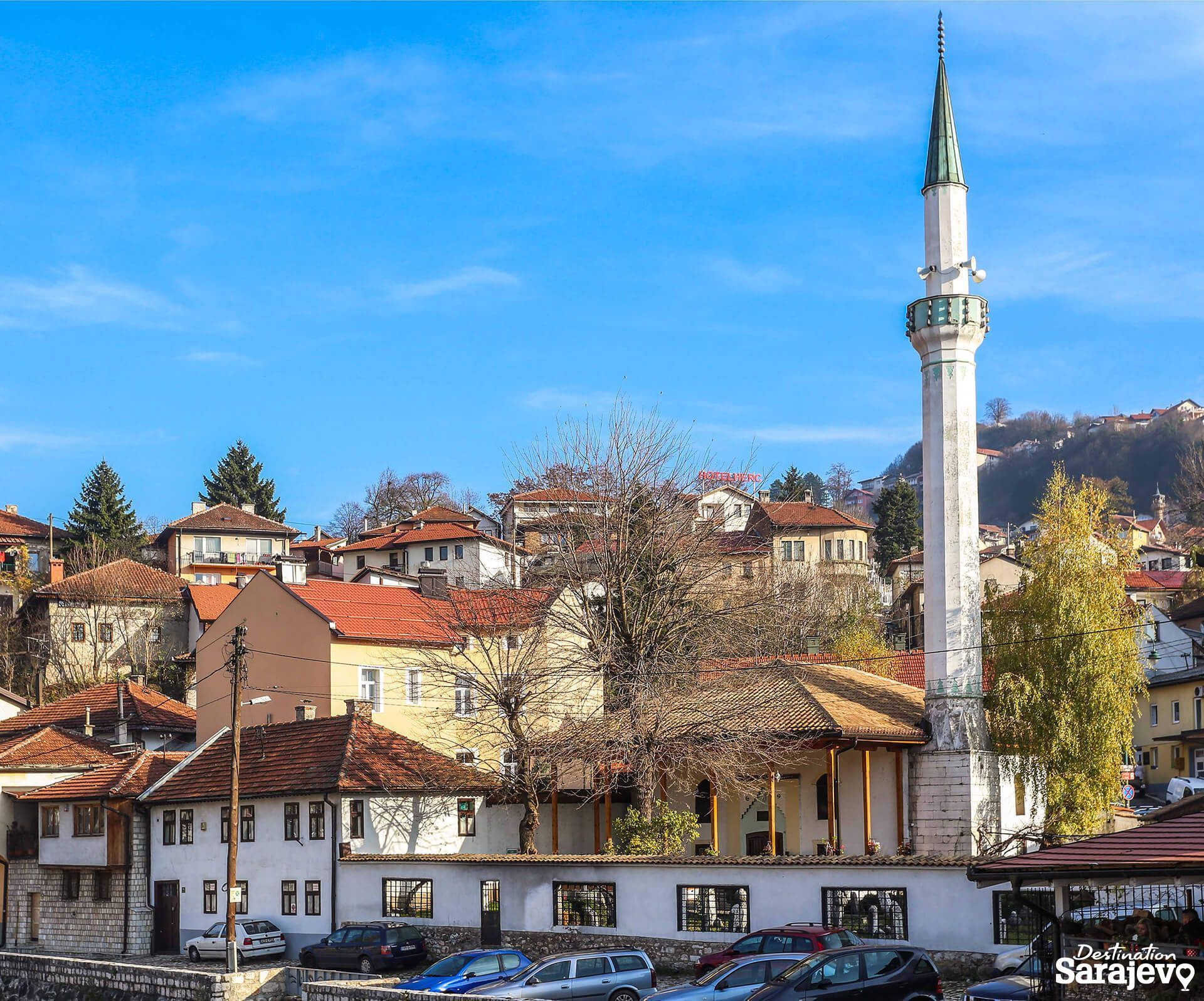
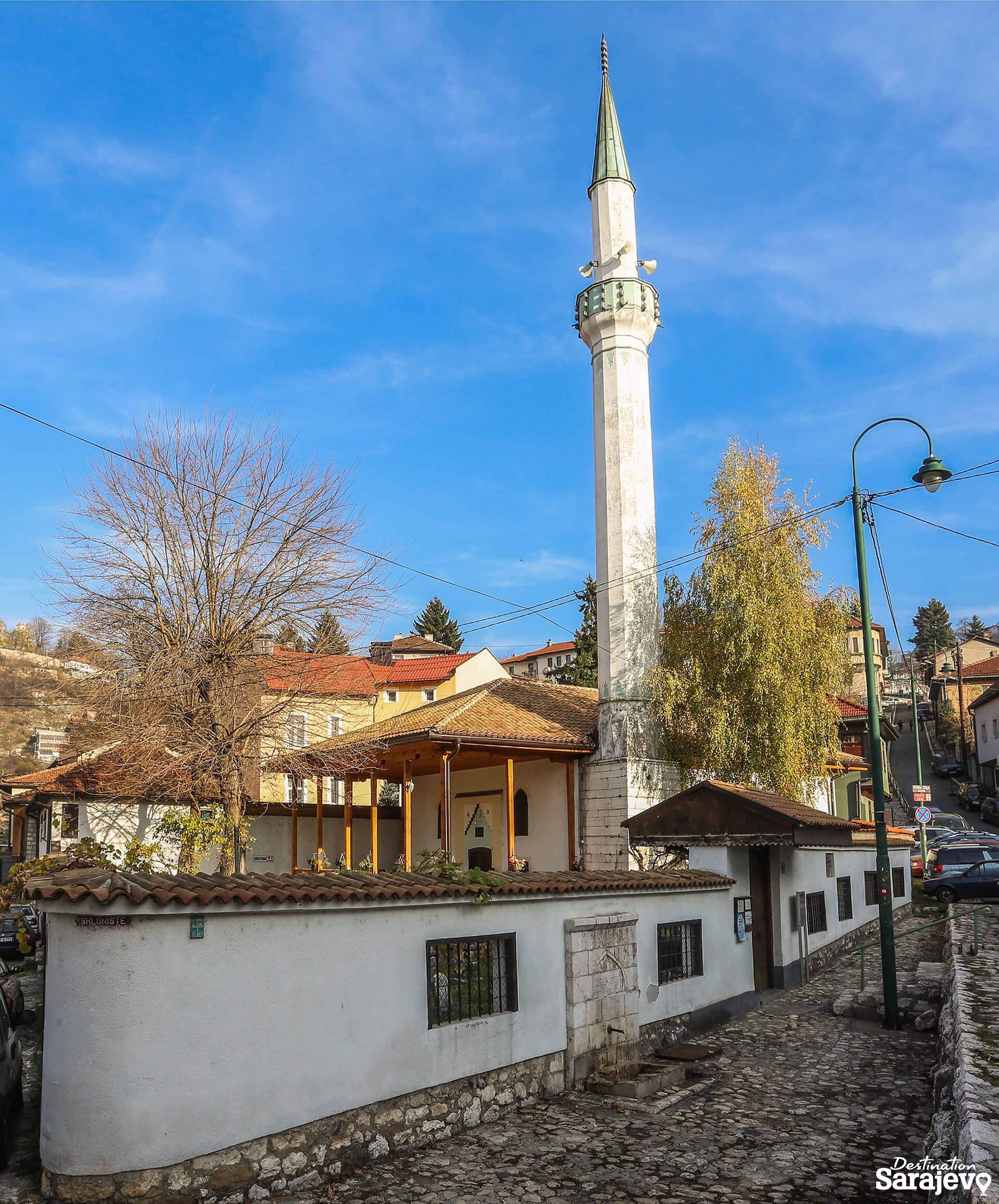
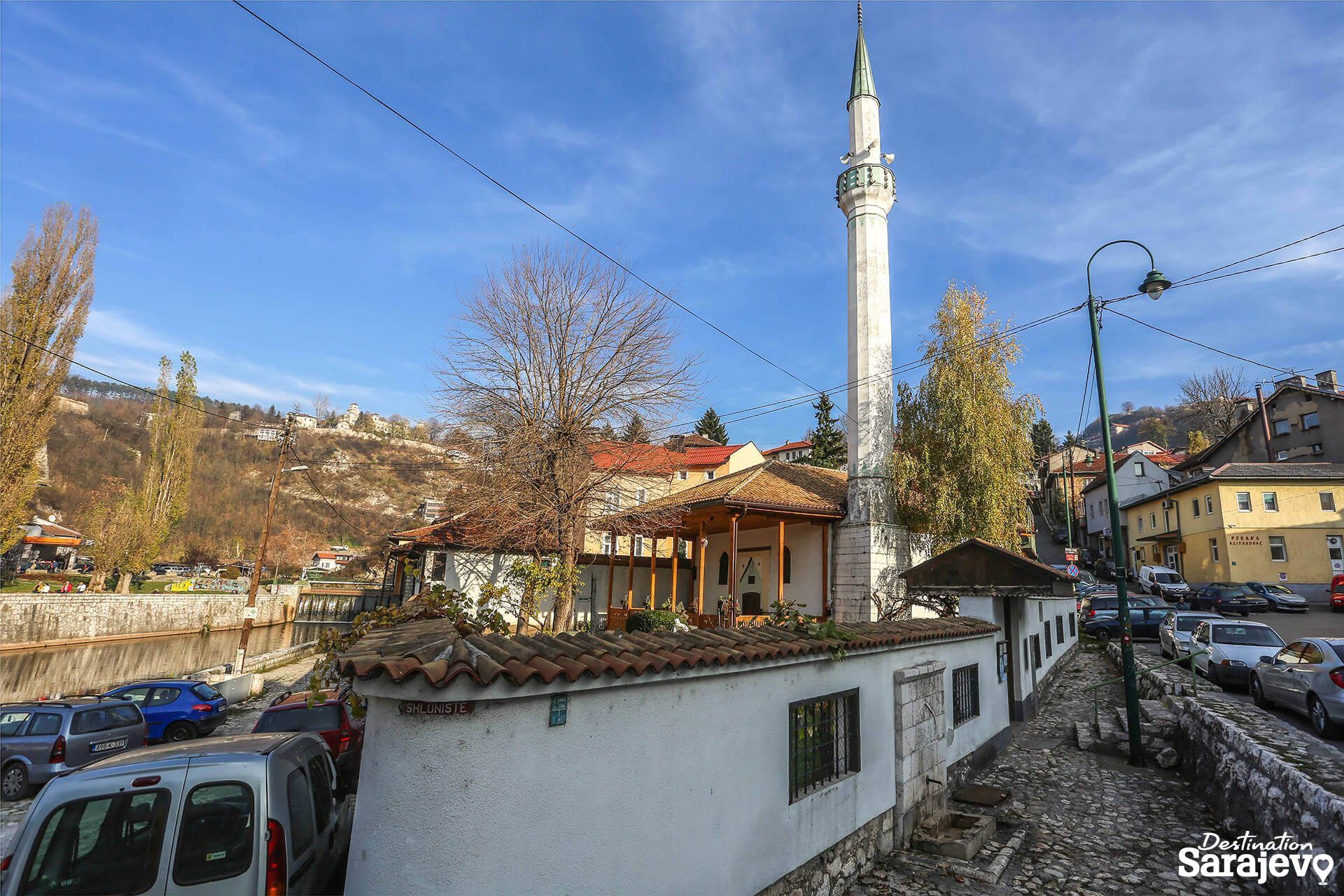
It is said that this bridge was built between 1541 and 1561 by Mustafa, a vekil harč (quartermaster) who served under Gazi Husrev Bey, a Bosnian governor. This is one of the few mosques in Sarajevo that is not named after a person; rather, it refers to the occupation of the individual whose endowment made its construction possible.
Vekil Harčova Mosque is an example of a single-room mosque with an open portico, a square hip roof and a stone minaret.
The mosque is called Hadžijska Mosque because it was situated near the exit point used by those leaving for the pilgrimage (Hajj) to Mecca, and there was a tradition of reciting the Hajj supplication in this very mosque on behalf of the pilgrims.
Water from the slopes of Trebević was brought to the mosque, and, in 1801, “the fountain beneath Alifakovac” was commissioned by judge Mustafa Fevzi Mostarac. This fountain has been depicted on the canvases of many artists.
The mosque burned during the fire that engulfed Sarajevo after Eugene of Savoy sacked the city in 1697, but mahala residents quickly repaired it.
Besides Vekil Harč Mustafa, other benefactors of the mosque include the wealthy Sarajevo merchant, Hajji Bešlija Mustafa, who directed a good deal of his own fortune toward the upkeep of the mosque.
The tombstones in the mosque’s courtyard include those for the grave of Vekil Harč Mustafa, as well as for the Morić brothers, leaders of a ten-year rebellion against Ottoman authorities, who were killed in 1757.
Hadžijska (Vekil Harčova) Mosque was made a National Monument of BiH on May 9,
LOCATION / AREA
Old Town
SIGHTSEEING LABEL
Religion, History, Walkable from Center, Accessible by Public Transport
DISTANCE FROM AIRPORT
8.6km
DISTANCE FROM SARAJEVO BUS STATION
3.0km
Distance from the center
1.8km
NEAREST PUBLIC TRANSPORT STATION
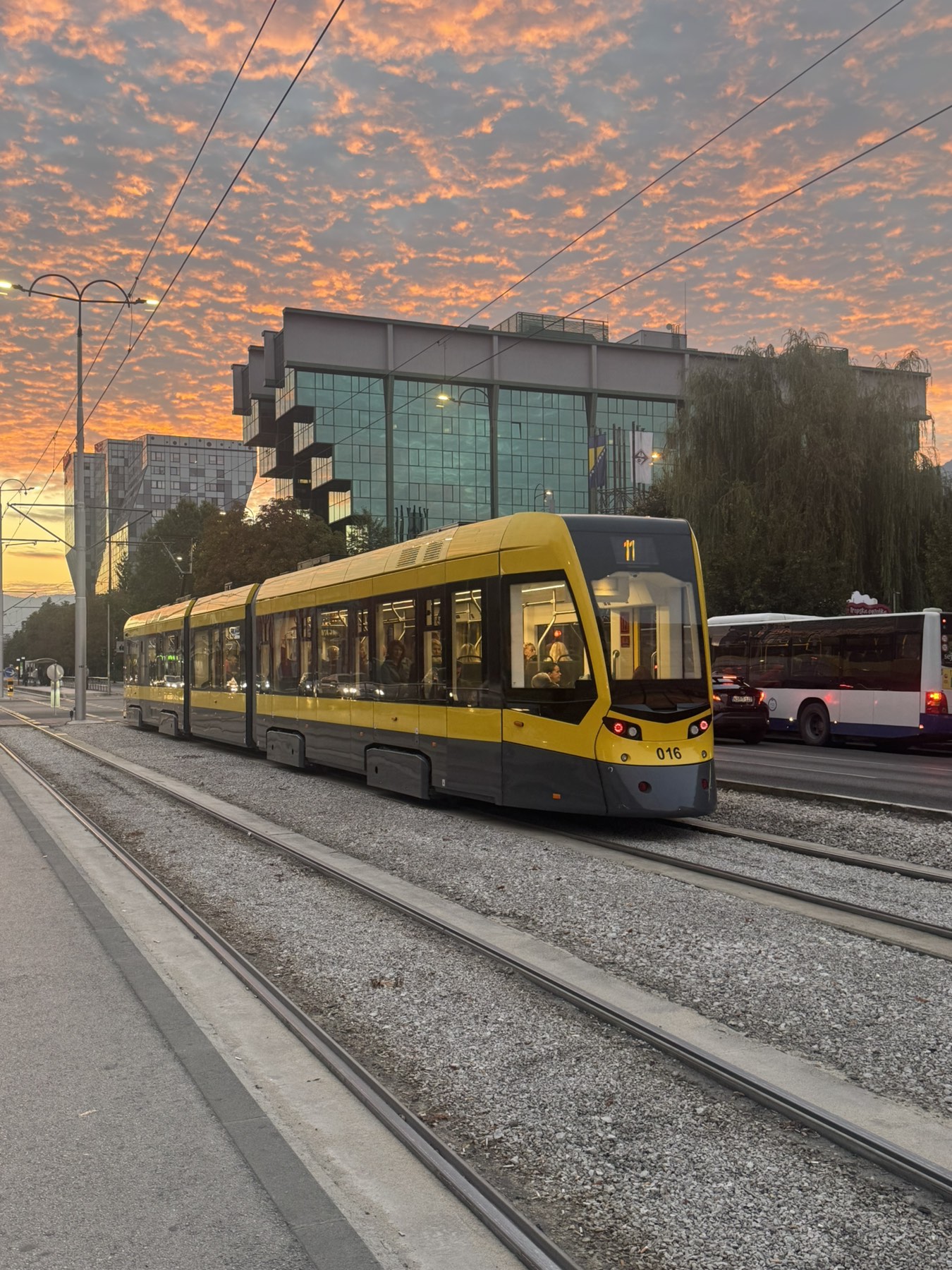
Tram station Vijecnica - 117m
Google reviews

The mosque is well located and pretty, but a rude man prevented us from praying inside حسبي الله ونعم الوكيل

Good masjid to pray at, has wudu facilities. Women normally buy for jumuah no space for women.


🚨 MOSQUE CLOSED WHEN I PASSED BY DURING PRAYER TIME (DHOR) 🚨 The Vekil Harač Mosque (Vekil Harčova džamija), better known to locals as Hadžijska džamija ("the Pilgrims' Mosque"), is one of the oldest mosques in Sarajevo. Located in the historic Alifakovac district, near the Šeher-Ćehaja ćuprija (a type of sarcophagus) and the old Alifakovac Cemetery, it was built between 1541 and 1561. It is now a National Monument of Bosnia and Herzegovina. The mosque was founded by Mustafa Vekil Harač, steward (vekil-harč) to the renowned governor Gazi Husrev-bey. Its nickname derives from its administrative function: the vekil-harč was responsible for the governor's supplies and expenditures. Thanks to his vakuf (pious foundation), he had the mosque built in the heart of a new mahala (neighborhood), which grew up around it in the mid-16th century. The mosque is best known as Hadžijska džamija (Pilgrims' Mosque) because of an old Sarajevo tradition. Before departing for the Hajj, pilgrims from Sarajevo would gather in front of this mosque to perform a final prayer with their loved ones. They would then leave the city along the old road passing through Alifakovac and Kozja ćuprija (the "Goat Bridge"), which marked the beginning of the long journey to Mecca. This custom gave the building its nickname, "the Pilgrims' Mosque." Built in the style of Ottoman neighborhood mosques, it features a single prayer hall, an open portico, a hipped roof, and an elegant stone minaret. It is surrounded by an old mezaristan (cemetery), a stone wall, and a fountain restored in the early 19th century. The cemetery notably contains the tomb of its founder, Mustafa Vekil Harač, as well as those of the famous Morić brothers, leaders of a revolt against the Ottoman administration in the 18th century, who were executed in 1757. Over the centuries, the mosque has undergone several restorations. In 1938, its roof was altered, before a major conservation project was launched in the 21st century to restore its historical appearance. Despite some damage during the Bosnian War (1992-1995), it was preserved.

Trash toilets, excuse the expression.