



The Church of St. Vincent de Paul
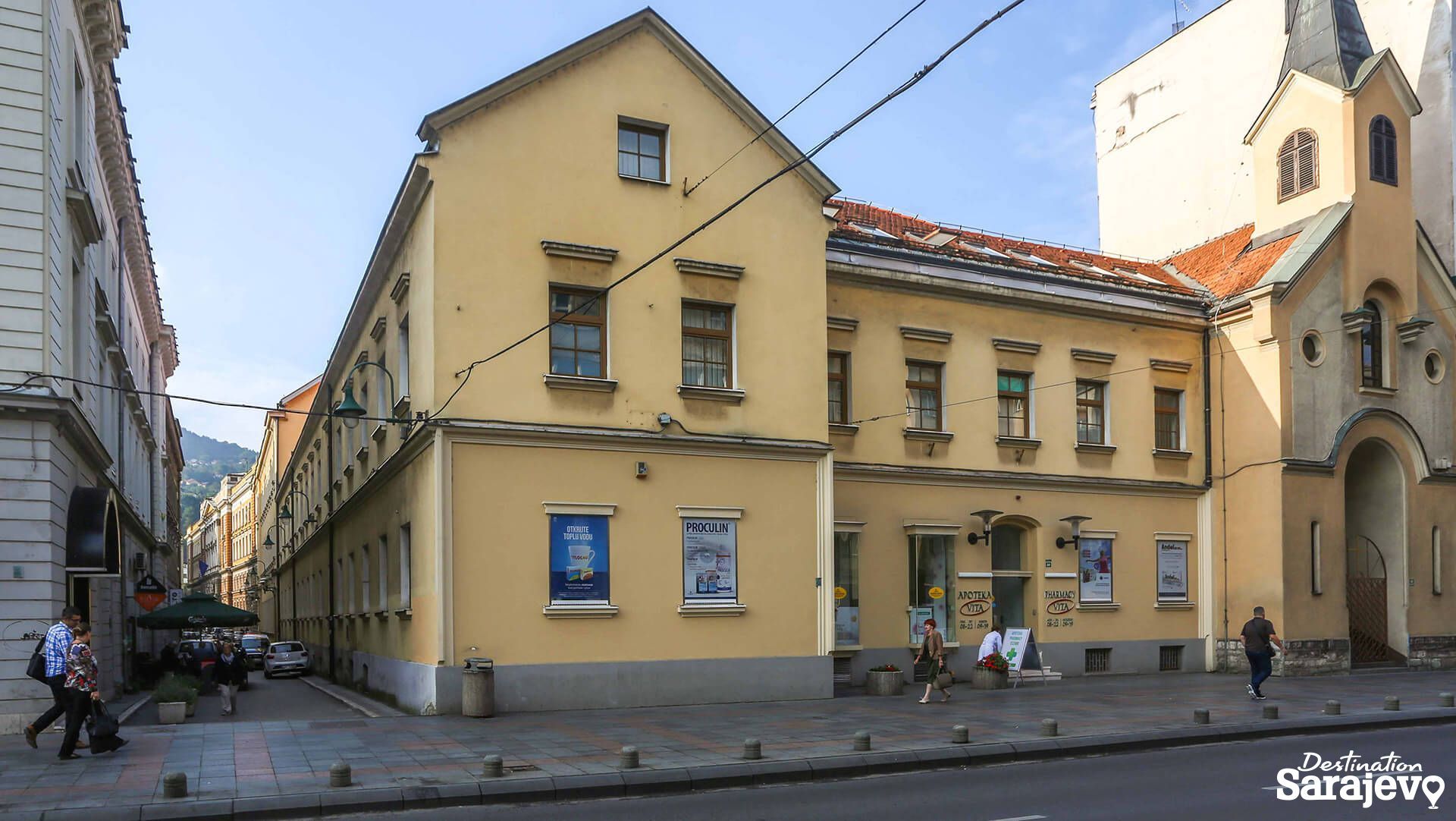
The first Religious Sisters of Mercy, whose patron saint was Vincent de Paul, came to Sarajevo in 1871, when parish priest Father Grg Martić provided lodging for them in a little house next to the old parish church on the Miljacka. In 1874, some land was purchased for them, on Kovačići, which is where the convent and girls' school were built.
In 1879, during Austro-Hungarian occupation, these buildings were set on fire, and the Sisters went to Zagreb, but they returned the following year.
Seeing that the number of students was growing, Josip Stadler, the first archbishop of Sarajevo, purchased a plot of land that is now surrounded by Titova, Branilaca Sarajeva and Šenoina Streets. It was here that a church and convent were built in 1883, while the school and the St. Vincent de Paul Institute were built in 1904.
A public kitchen was opened in the building following the annexation of BiH in 1908, and a High Trade School found a home here in 1939.
The convent and school were damaged during the bombing of 1941, and the German Army was housed here after the Nazis took over the city. After Sarajevo's liberation in 1945, the complex was put under the jurisdiction of National Liberation Army (NOV) units.
The building became state property in 1949, and a few of the nuns were ordered to move to Kraljeva Sutjeska, which was part of the the nuns' mother house in Zagreb, while several others stayed on to work in the city hospital.
Numerous cultural, sports and educational organizations were housed here over the coming decades.
During the war (1992-1995), the school, convent and church were damaged by shelling, and the space was later used to house refugees. The nuns who returned during those years opened 11 specialized clinics, a pharmacy and a public kitchen, all with help from the Archdiocese of Vrhbosna and Caritas.
The Medical High School (part of Catholic School Center) continued to work in the renovated building from 2004 to 2015, and the convent reopened on September 14, 2014.
The entire Church of St. Vincent de Paul complex (which comprises the church, the Sisters of Mercy Convent, a school, a garden and movable heritage) has been a National Monument of BiH since 2011.
LOCATION / AREA
Center
SIGHTSEEING LABEL
Architecture, History, Religion
DISTANCE FROM AIRPORT
7.5km
DISTANCE FROM SARAJEVO BUS STATION
1.8km
Distance from the center
537m
NEAREST PUBLIC TRANSPORT STATION
Tram station Banka - 74m
Google reviews


Living church whatever the size of it.❤️

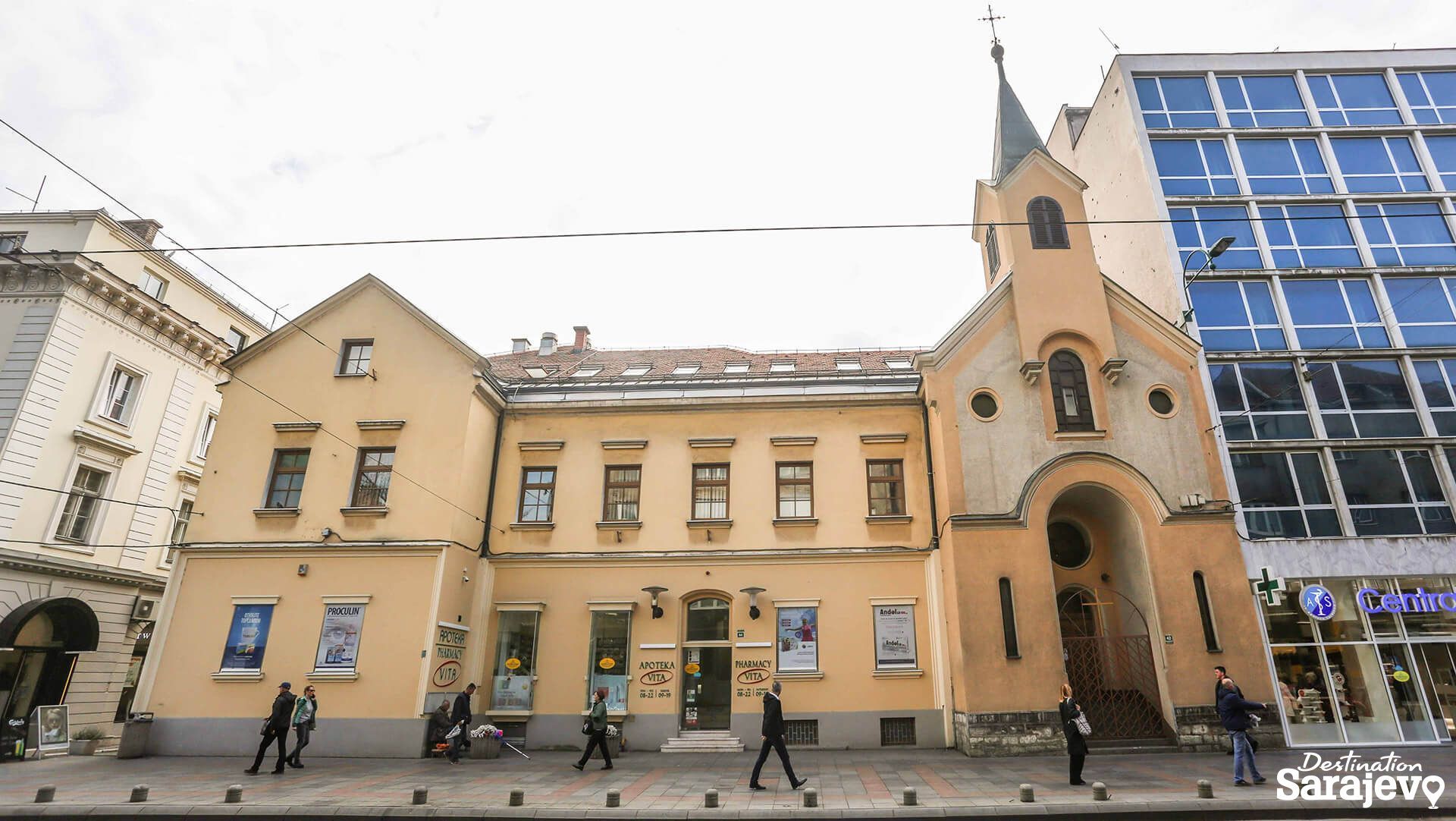
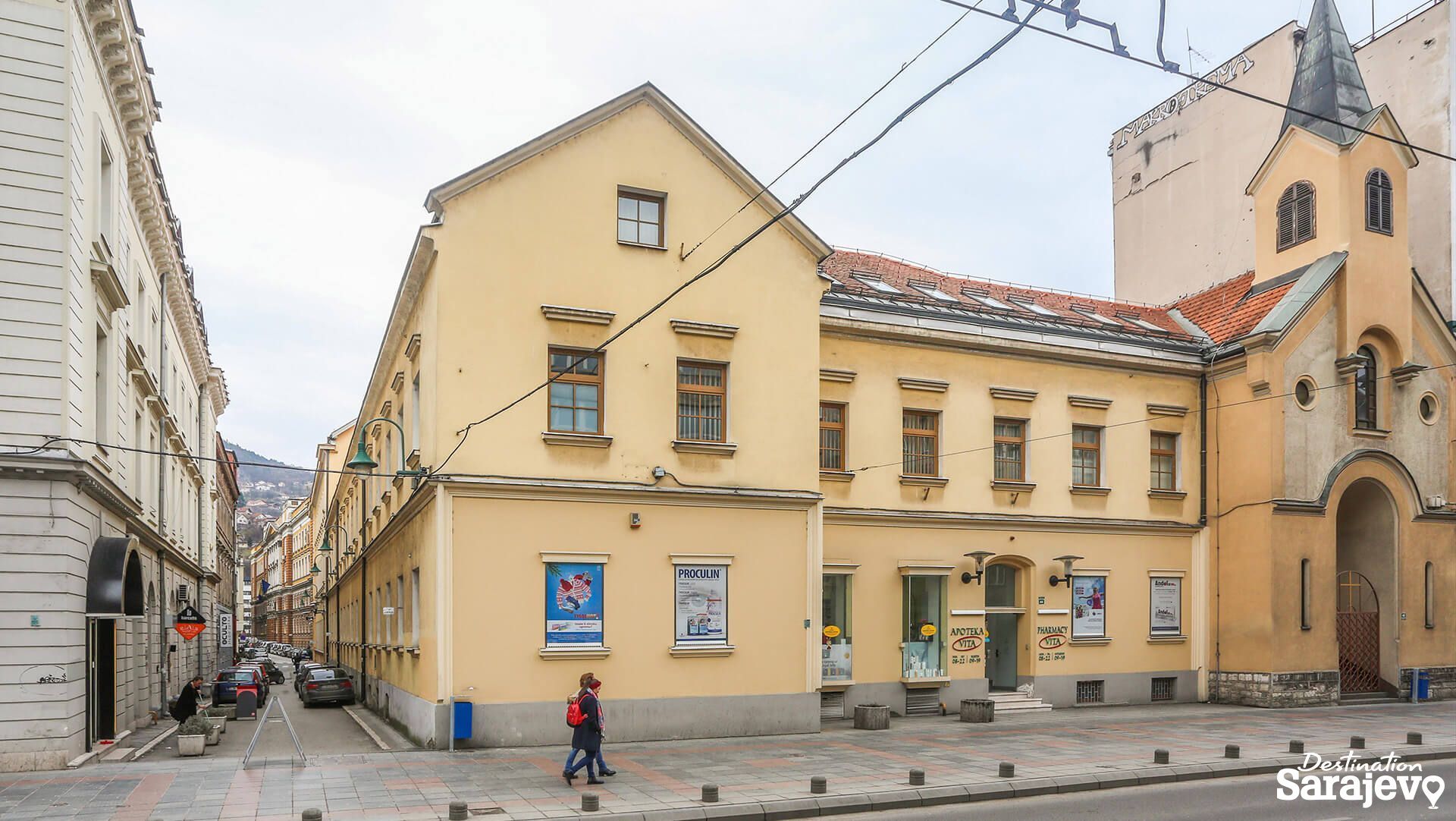
You have probably noticed that advertising materials representing the capital of Bosnia and Herzegovina usually feature sacral buildings of the four major religions. The Catholic Church is almost always represented by the cathedral, followed by: the "unconceived" cathedral in Marijin Dvor, the monastery in Bistrik, and sometimes the Catholic Faculty of Theology and the Stup shrine... In all this, the Church of St. Vincent de Paul and the accompanying monastery, right next to the central city promenade, undeservedly fall into the background, even though it is the oldest preserved Catholic church in Sarajevo, whose construction dates back to before the establishment of the regular Church hierarchy in Bosnia and Herzegovina... The Church of St. Vincent de Paul and the Monastery of the Sisters of Charity have great ambient and historical value within the Sarajevo city entity, and in addition, in 2011 they were declared a national monument. The architectural complex consists of: the church located on the western side of the complex along Titova Street and the monastery that is attached to the eastern side of the church. The monastery is located at the intersection of Titova and Šenoine streets, and is connected to the building of the former Medical School of the Catholic School System for Europe, which returned to Banjski Brijeg in the 2016/17 school year. The entrances to the church and the monastery are directed towards the central Sarajevo promenade, while in the hinterland there is a nationalized parking lot. The main material used for the construction of the complex is high-quality brick. In terms of the design of the facade, the church and the monastery are built in a strict historicist manner, the expression of which is closest to neo-Romanesque, with the exception of the building of the former medical school, where the influences of Art Nouveau are visible. The church belongs to the type of single-nave buildings built of brick with a bell tower to the north and an apse to the south. The northern facade of the church has a symmetrical composition, in the center of which there are double doors, and what is interesting compared to other Sarajevo churches is the vaulted and recessed entrance. Unfortunately, its side facades are not visible, since there is a monastery to the east, and a classic example of socialist construction to the west that "covered" the church. Since it is not a parish church that has "its own faithful", and is located near three larger places of worship, two of which are parish and one is a monastery, there were not many people at the early morning masses. Therefore, in cooperation with the Archbishop of Vrhbosna, Vinko Card. Puljić, it was decided to organize a full-day adoration before the Most Holy once a week, on Thursdays, when the faithful, each according to their own abilities and needs, come to the church.


THE CHURCH OF SAINT VINKO IS LOCATED IN THE VERY CENTER OF THE CITY OF SARAJEVO.. THE ONE AND ONLY BEAUTIFUL BUILDING OR RELIGIOUS OBJECT.. IT IS NOT ONLY BEAUTIFUL BUT IT IS MAGICAL MYSTICAL AS IF IT HAS EXISTED THERE FOR A THOUSAND YEARS.. A SMALL RELIGIOUS OBJECT BUT VERY BIG IN THE EYES OF THE BELIEVERS☯️♏😎