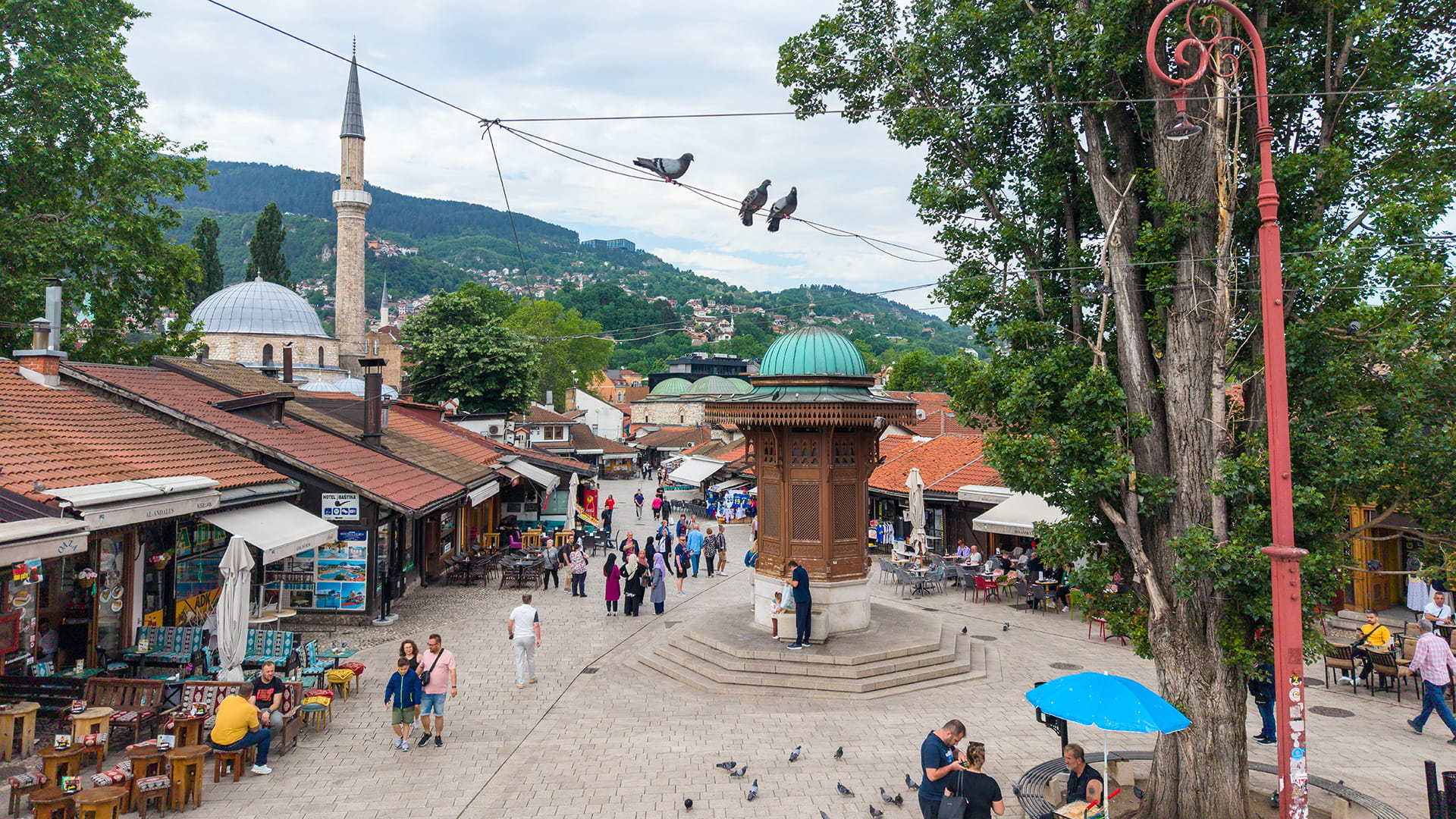
Top attractions in Baščaršija — Sebilj and Gazi Husrev-beg Mosque.
Sebilj (iconic fountain), Gazi Husrev-beg Mosque (1531), Morica Han (Ottoman caravanserai), the Clock Tower, Sarači street — all within a 300-meter radius.
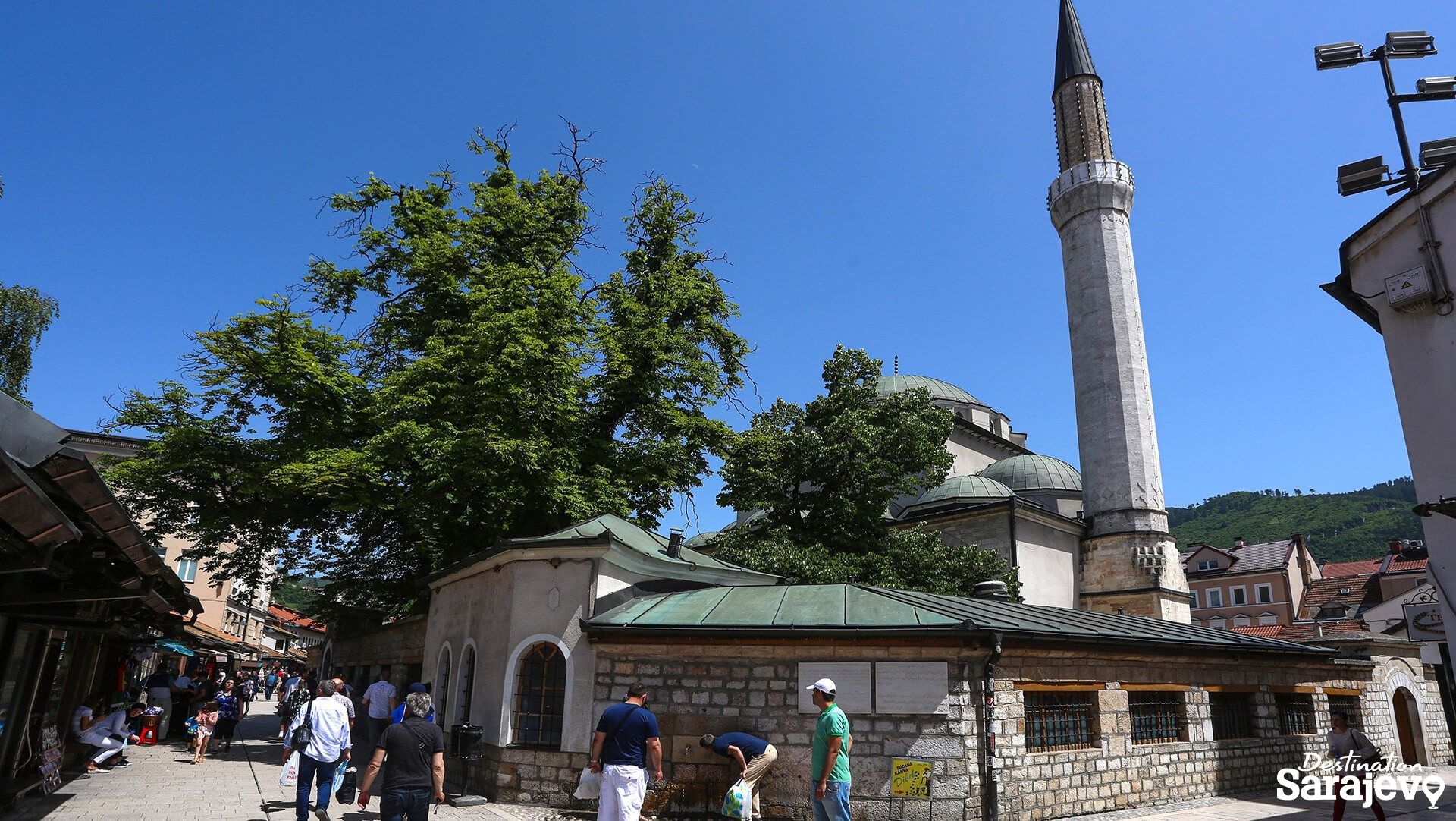
Gazi Husrev Bey’s Mosque, or Bey’s Mosque, as it is known locally, was built in the center of Baščaršija in 1530. Bey’s Mosque was designed by Adžem Esir Ali, a Persian from Tabriz, who was the chief architect in the Ottoman Empire at that time.
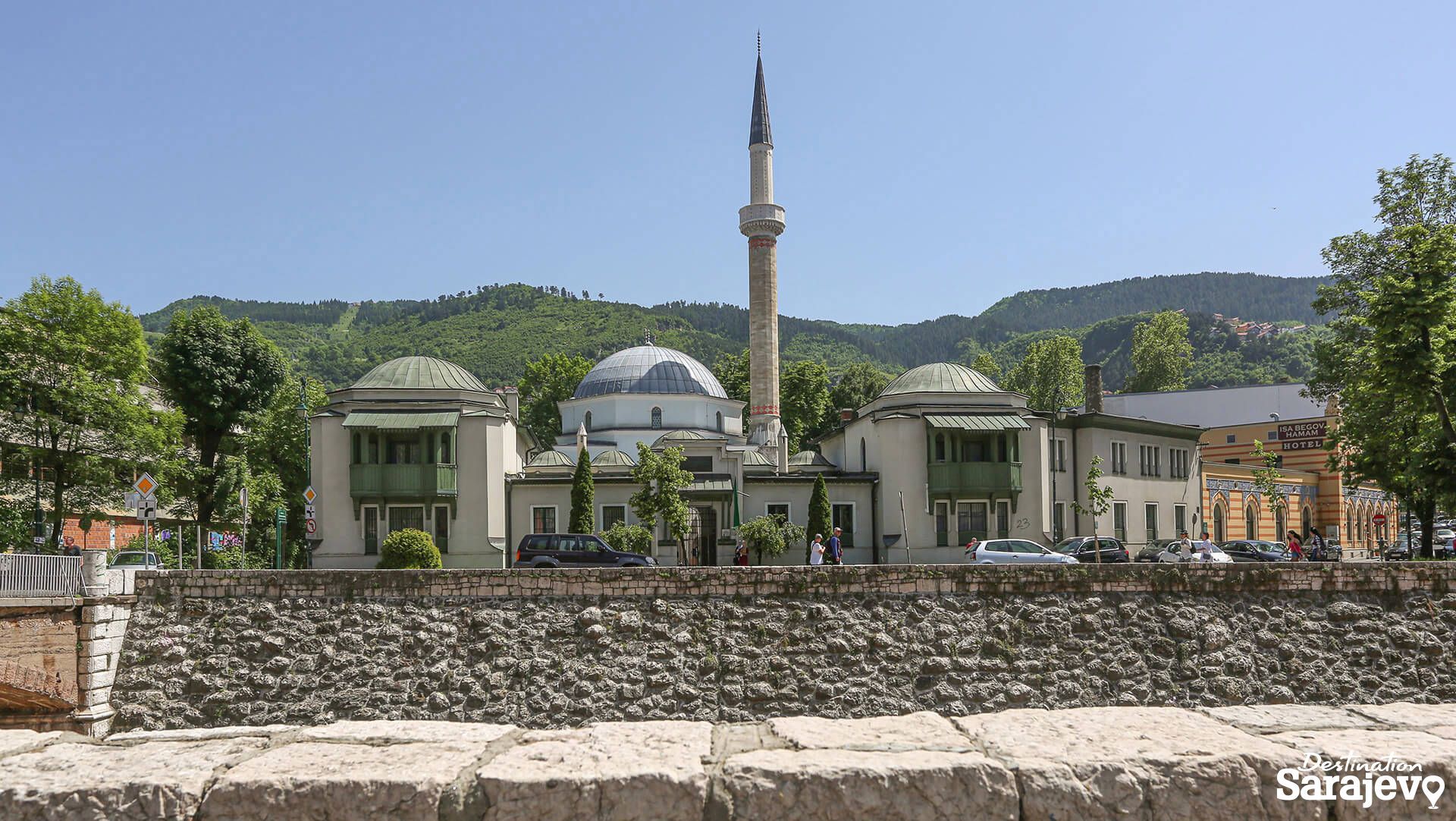
The Emperor’s Mosque is Sarajevo’s oldest mosque and one of the oldest in Bosnia and Herzegovina. It is presumed that Isa Bey Ishaković, the founder of Sarajevo, had this place of worship built soon after the city’s founding in 1462 in honor of Sultan Mehmed II “the Conqueror”.
RECOMMENDED PLACES